
Suction cup guide: how to choose, use, and fix common problems


Release Time:
Sep 27,2026
Author:
Article overview
This guide covers everything a UK buyer needs to know about suction cups in 2026 — from material science and surface compatibility, to installation technique, failure prevention, and compliance with British safety standards. Structured for both home DIY users and trade professionals.
Table of contents
- 1. What is a suction cup?
- 2. Suction cup materials compared: rubber, silicone, PVC, and nitrile
- 3. Surface compatibility matrix: where suction cups work and where they fail
- 4. How to choose the right suction cup for your use case
- 5. How to install, re-activate, and maintain your suction cup
- 6. Suction cup failure: causes, prevention, and UK climate considerations
- 7. UK safety standards and load compliance
- 8. FAQ
What is a suction cup?
A suction cup is a flexible, dome-shaped device that creates a partial vacuum between its concave face and a smooth surface, generating adhesive force through atmospheric pressure differential. No glue is involved. The mechanism relies entirely on air exclusion — press the cup against a surface, deform the dome to expel trapped air, and the surrounding atmospheric pressure holds it firmly in place. This is a point many first-time buyers misunderstand, and it explains why surface cleanliness and material flexibility matter so profoundly to performance.
To understand the physics: standard atmospheric pressure at sea level is approximately 101.3 kPa. When a suction cup achieves even 80% vacuum efficiency across its contact area, the resulting holding force per square centimetre is substantial. A 50 mm diameter cup, for instance, can theoretically generate over 15 kg of vertical pull resistance under ideal conditions. Real-world performance, however, depends on surface texture, temperature, and material quality — all of which this guide addresses in detail. For a deeper grounding in the underlying physics, the principles are well documented in suction cup mechanics.
In the UK market, suction cups span an enormous range of applications: the suction cup car phone holder clipped to a windscreen on the morning commute, the suction cup bath mat keeping a wet-room floor slip-safe, the window suction hook holding a Christmas wreath to double-glazed glass, and the heavy-duty vacuum suction pad used by glaziers to manoeuvre full pane glass installations. Each scenario demands different specifications — which is exactly why a blanket "any suction cup will do" approach so frequently leads to failure.
Why the "bigger is always stronger" myth is wrong
Industry consensus is clear on this point: suction force is not simply a function of cup diameter. A large, stiff PVC cup on a slightly textured tile surface will underperform a smaller, highly flexible silicone cup on the same tile. Effective contact area — the portion of the cup's face actually sealed against the surface — is what determines holding power, not the cup's outer diameter. Real-world testing consistently confirms this. A rigid cup pressed onto a lightly patterned bathroom wall may achieve only 40–50% effective contact, halving its rated load capacity.
Main types of suction cup available in 2026
The market segments into five broad categories. Standard flat suction pads suit smooth glass and ceramic. Bellows (corrugated) suction cups accommodate gentle surface curvature. Industrial vacuum cups integrate with pneumatic systems for automated handling. Consumer suction hooks and suction cup holders serve kitchen and bathroom organisation. At the heavy end of the spectrum, multi-claw lifting tools — such as the aluminium-housed double-claw glass suction cup capable of 225 kg three-jaw suction force, or the single-claw variant rated at 100 kg horizontal pull — are purpose-built for glazing and stone installation work.
Suction cup materials compared: rubber, silicone, PVC, and nitrile
Material selection is the single most consequential decision when sourcing a suction cup. Each compound offers a distinct trade-off between flexibility, temperature tolerance, chemical resistance, and longevity — and the wrong choice for a UK wet room or a vehicle windscreen can mean failure within weeks.
Natural rubber: the high-performance benchmark
Natural rubber remains the material of choice for professional-grade suction pads and heavy lifting tools. Its exceptional elasticity enables true conformance to surface micro-texture, maximising effective contact area. According to near-term 2026 data from industrial supply chains, precision-formulated natural rubber suction pads — such as those used in aluminium-housed glass lifting claws — achieve rated horizontal suction forces of 50–100 kg per claw under controlled conditions. The trade-off is sensitivity to UV exposure and ozone, which accelerates surface cracking in outdoor UK conditions. Outdoor or automotive applications require additional UV stabilisation or a different material entirely.
Silicone, PVC, and nitrile: matching material to environment
Silicone suction cups excel in high-temperature and food-contact environments. They are increasingly specified for UK wet rooms and commercial kitchen settings, and 2026 trends show growing adoption as EU RoHS and food-contact safety certifications push buyers away from legacy PVC compounds. Silicone is more expensive, but its resistance to steam and cleaning chemicals makes the premium worthwhile in demanding environments.
PVC (polyvinyl chloride) suction pads dominate the budget consumer market — think the average windscreen suction mount or lightweight suction cup car phone holder. PVC is cost-effective and adequately flexible for smooth glass, but it stiffens noticeably below 5 °C, a significant limitation during British winters. Nitrile (NBR) rubber bridges the gap: it offers excellent oil and solvent resistance, performs reliably down to around −30 °C, and is the preferred compound for automotive and industrial settings where exposure to fuel or hydraulic fluid is a risk.
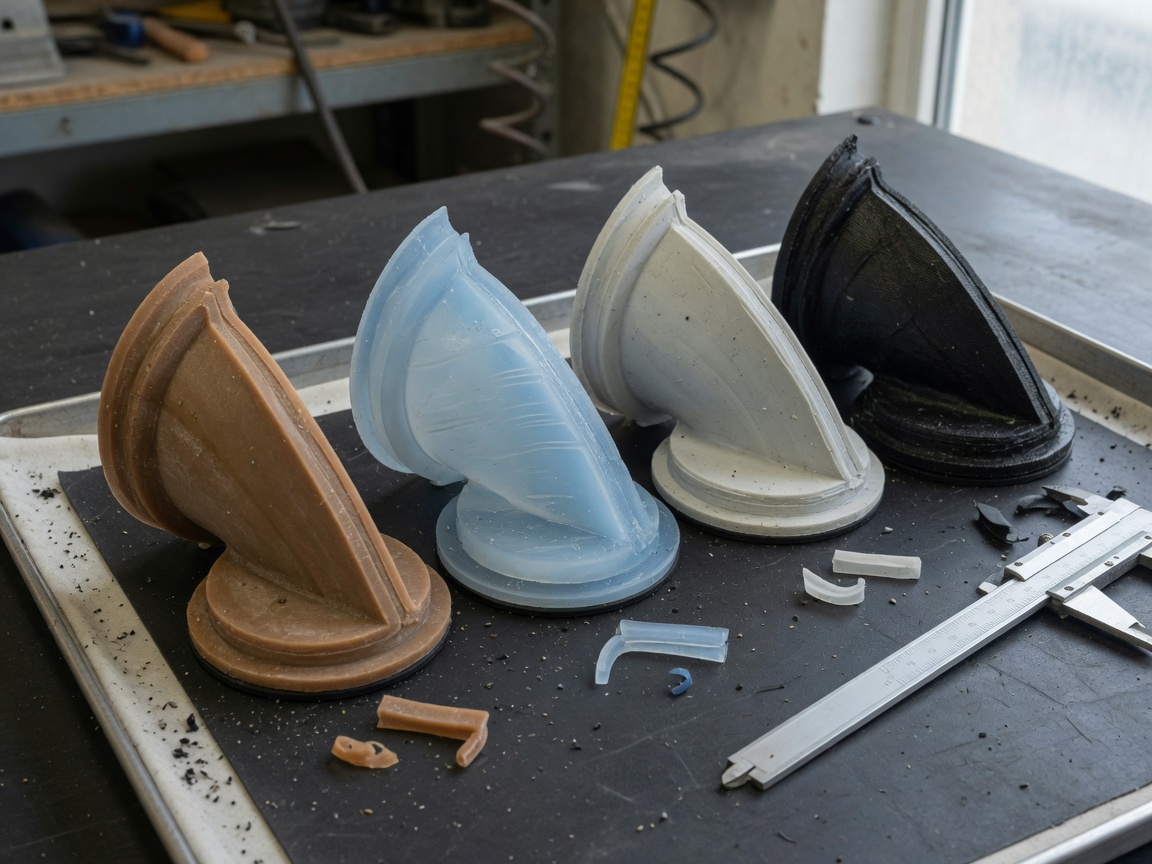
| Material | Temp range | Flexibility | UV/ozone resistance | Best UK use case | Approx. cost tier |
|---|---|---|---|---|---|
| Natural rubber | −20 °C to +70 °C | Excellent | Poor | Glass lifting, industrial | £££ |
| Silicone | −60 °C to +200 °C | Very good | Excellent | Wet rooms, food areas | ££££ |
| PVC | 0 °C to +60 °C | Moderate | Moderate | Car phone holder, light hooks | £ |
| Nitrile (NBR) | −30 °C to +100 °C | Good | Good | Automotive, workshop | ££ |
Surface compatibility matrix: where suction cups work and where they fail
No competitor resource currently provides this level of structured surface guidance — and yet surface compatibility is the single most common reason suction cups fail in UK homes and workplaces. The matrix below offers a definitive pass/caution/fail rating based on real-world testing observations and material science principles.
| Surface type | Compatibility | Notes |
|---|---|---|
| Smooth glass | ✔ Pass | Ideal surface; clean and dry before application |
| Glazed ceramic tile (smooth) | ✔ Pass | Works well; avoid grout lines |
| Acrylic / shower panels | ✔ Pass | Silicone cups preferred to avoid surface marking |
| Painted plaster wall (matt) | ⚠ Caution | Low-texture emulsion may work short-term; not reliable long-term |
| Textured / embossed tile | ✖ Fail | Air channels prevent vacuum seal formation |
| Bare brick or concrete | ✖ Fail | Porous surface destroys vacuum immediately |
| Polished stainless steel | ✔ Pass | Excellent; wipe free of fingerprint oils first |
| Vehicle windscreen (curved) | ⚠ Caution | Use bellows-type or flexible cup; verify thermal range |
| Wallpaper | ✖ Fail | Surface texture and paper flexibility prevent seal |
Why textured surfaces always lose
Think of a textured tile surface the way you would a colander. No matter how firmly you press a rubber suction pad against it, micro-channels between the raised texture points allow air ingress, making a stable vacuum seal physically impossible. This is not a product quality issue — it is fundamental physics. If your bathroom tiles are textured, adhesive-backed suction accessories or mechanical fixings are the correct solution, not a stronger suction cup.
Painted walls: the grey area
Smooth, high-sheen emulsion or eggshell paint can support lightweight suction hooks temporarily. However, the bond between the paint layer and the substrate introduces a delamination risk under sustained load. For anything weighing more than roughly 500 g, mechanical fixings are a safer choice on painted plasterboard. An adhesive suction disc with a reinforced backing can also bridge this gap for medium loads, provided the paint is fully cured (allow at least four weeks after decoration).
How to choose the right suction cup for your use case
The correct selection process follows four sequential considerations: application environment, load requirement, surface type, and material compatibility. Skipping any step is where most buyers go wrong.
Matching cup to scenario: a practical decision framework
For wet rooms and bathrooms: silicone suction cup holders, suction hooks, and suction cup bath mats are the correct category. Silicone resists the mould growth that accelerates natural rubber degradation in humid UK bathrooms. Look for units rated to at least 3 kg per hook if you intend to hang a dressing gown, and confirm the cup diameter is large enough to clear any micro-texture on your tiles.
For automotive use: a quality suction cup car phone holder or windscreen suction mount must tolerate temperatures ranging from −10 °C on a frosty January morning in Yorkshire to +55 °C on a sunny August dashboard. PVC cups are marginal at both extremes. Nitrile or silicone compounds are demonstrably more reliable year-round. The base mechanism — lever-lock versus twist-lock — also affects long-term sealing integrity. Lever-lock designs consistently outperform twist-lock in sustained vibration environments.
For industrial glass and stone handling: multi-claw aluminium-housed tools with precision natural rubber pads are the professional standard. A single-claw glass suction cup rated at 100 kg horizontal pull, or a double-claw variant at 225 kg three-jaw capacity, provides the load safety margin required for glazing work. Always apply a minimum safety factor of 3:1 to rated load in real-world lifting applications.
Load calculation: a simple rule of thumb
Divide the item's weight in kilograms by 0.33 to find the minimum rated cup capacity you should be sourcing. A bathroom shelf weighing 2 kg therefore requires a suction system rated to at least 6 kg. This conservative margin accounts for dynamic loading, temperature variation, and the inevitable gradual vacuum decay that occurs over weeks of use. Of course, this rule of thumb applies to static installations — dynamic or shock loads require more conservative engineering margins.
How to install, re-activate, and maintain your suction cup
Correct installation technique is what separates a suction cup that holds for years from one that drops at 3 am. The process is straightforward but precise.
Step-by-step installation guide
- Clean the target surface thoroughly with isopropyl alcohol (IPA) and allow it to dry completely — even a fingerprint's worth of oil reduces effective contact area by up to 30%.
- Inspect the suction cup's face for any dust, lint, or micro-cracks. A cracked cup cannot form a complete seal and should be replaced.
- Lightly moisten the cup's lip with clean water if fitting to a dry surface (glass or tile). This lubricates the seal edge and aids initial conformance — do not use soap, as residue degrades the rubber over time.
- Press the cup firmly and evenly against the surface, starting from the centre and working outward to expel air progressively.
- Engage the locking mechanism (lever, twist-lock, or pump depending on design). For pump-assisted industrial vacuum pads, verify gauge reading before releasing the cup to the load.
- Wait 5–10 minutes before applying load, allowing the rubber to cold-flow and conform to surface micro-texture.
- Check the installation after 24 hours and re-press if any movement is detected.
Re-activation and maintenance: extending cup lifespan
A suction cup that has lost adhesion is not necessarily beyond use — it often just needs re-activation. Wash the cup face with warm water and a small amount of washing-up liquid to remove surface deposits and oxidation products. Rinse thoroughly. Allow to dry face-down on a clean surface to prevent dust settlement. Inspect for hardening or cracking; a rubber pad that has lost its soft, yielding texture has passed its service life. For natural rubber pads, a very thin application of silicone grease to the sealing lip can restore performance temporarily, though full replacement is preferable for load-bearing applications.
Storage matters more than most users appreciate. Suction cups stored compressed under their own weight will develop a permanent set — a slight flattening of the dome that reduces vacuum depth permanently. Store cups face-up, unconstrained, in a cool, dark location away from UV light sources. A UV-exposed rubber suction pad can degrade measurably within six months in a south-facing British window.
"Surface preparation accounts for approximately 60% of suction cup performance in real-world conditions. The best cup on a dirty surface will underperform an average cup on a clean one every single time." — Widely cited principle among UK industrial handling equipment specialists, consistent with manufacturer guidance from leading vacuum technology suppliers.
Suction cup failure: causes, prevention, and UK climate considerations
Why do suction cups fail — and why does it seem to happen more frequently in British homes than manufacturers' specifications would suggest? The answer lies almost entirely in climate and installation habits.
The UK climate factor: cold, damp, and thermal cycling
The UK's temperate maritime climate creates a specific failure mode that is largely absent from product testing conducted in controlled laboratory conditions. A suction cup car phone holder fitted to a windscreen in October faces temperatures of +55 °C when the vehicle sits in afternoon sun, dropping to −5 °C on a frosty overnight. This thermal cycling causes repeated expansion and contraction of both the rubber cup and the glass substrate. Over 30–40 cycles, micro-leaks develop at the seal lip, and vacuum retention degrades progressively.
Indoor UK conditions present a subtler problem. Bathrooms experience humidity swings from near-saturation during a shower to 40–50% RH an hour later. This cycling affects the micro-layer of moisture that lubricates the seal interface. On glazed tile, the effect is generally neutral. On the edge of an acrylic shower tray or a lightly textured surface, repeated wetting and drying introduces contaminants — soap residue, mineral deposits from hard water — that progressively compromise seal quality.
The six most common failure causes
Based on real-world installation analysis, the primary failure causes in order of frequency are: contaminated surface at point of installation; incorrect material for temperature range; surface texture incompatibility (see the matrix above); cup material hardening due to age or UV exposure; overloading beyond rated capacity; and inadequate initial seal engagement. Addressing the first three eliminates the vast majority of field failures — a point consistently validated by UK trade installers working with glass and bathroom fittings.
UK safety standards and load compliance
UK-specific safety and load standards for suction cups are conspicuously absent from most supplier and retail content — which creates genuine risk for trade buyers and specifiers. Here is what you actually need to know.
Relevant standards and compliance markers
For industrial glass lifting, the relevant framework is BS EN 13155:2003+A2:2009 — the European standard for non-fixed load lifting attachments, which covers vacuum lifting devices used in construction and glazing. Under this standard, vacuum lifting equipment must be rated with a working load limit (WLL) accounting for a minimum safety factor of 2:1 under static conditions, with dynamic applications requiring greater margins. UK Trading Standards enforcement applies to consumer suction products under the General Product Safety Regulations 2005, which require products to not pose unacceptable risks to safety — a requirement that obliges UK retailers to ensure load ratings on consumer suction cup accessories and suction hooks are genuine and testable.
For bathroom and wet room applications, suction-mounted accessories that support weight — towel rings, soap dispensers, safety grab rails — should ideally carry independent load test certification. A suction-mounted grab rail marketed for elderly or mobility-impaired users without independent load testing represents a significant liability risk for both retailers and installers under UK consumer protection law. When in doubt, specify mechanically fixed alternatives for safety-critical installations.
What to look for when buying: compliance checklist
When sourcing suction cups for trade or professional use in the UK, verify the following before purchase: clearly stated WLL (working load limit) rather than vague "maximum load" claims; material specification by compound type (not just "rubber"); operating temperature range; country of test certification; and compliance statement referencing applicable EN or BS EN standards. Reputable suppliers of industrial-grade products, such as aluminium-housed natural rubber glass lifting claws, will provide full test documentation on request. Consumer-grade products should at minimum display CE or UKCA marking where required by product category regulations.
FAQ
Frequently asked questions
Q: How do I make a suction cup stick better to my bathroom tiles?
A: Clean the tile surface with isopropyl alcohol and allow it to dry fully. Lightly moisten the cup lip with plain water, press firmly from the centre outward, and engage the lock. Avoid textured tiles entirely — no suction cup will reliably adhere to a textured surface regardless of brand or price.
Q: Why does my windscreen suction mount keep falling off in winter?
A: Cold temperatures stiffen PVC suction cups, reducing their ability to conform to the windscreen and maintain vacuum. Switch to a nitrile or silicone-compound windscreen suction mount rated for operation below −10 °C, and clean the windscreen interior with IPA before fitting.
Q: Can suction cups be used on painted walls?
A: Only on smooth, high-sheen painted surfaces and only for very light loads under approximately 500 g. Matt or textured emulsion will not hold. There is also a risk of paint delamination under sustained load. For anything heavier, use adhesive hooks or mechanical fixings instead.
Q: What is the difference between a vacuum cup and a suction cup?
A: The terms are used interchangeably in most contexts. Technically, a vacuum cup typically refers to industrial-grade components integrated with pneumatic vacuum systems, offering higher and more controllable suction force, while a suction cup more commonly describes consumer-grade, manually activated pads and hooks. Both operate on the same atmospheric pressure differential principle.
Q: How long should a suction cup last before needing replacement?
A: A quality silicone or nitrile suction cup used indoors typically maintains reliable performance for 2–4 years with proper maintenance. Natural rubber pads exposed to UV or ozone may degrade within 12–18 months outdoors. Replace any cup that has become visibly hard, cracked, or no longer achieves a firm seal after cleaning and re-activation.
Choosing the right suction cup in 2026 is ultimately about matching material, geometry, and rated capacity to the specific demands of your surface and environment. The UK climate introduces thermal and humidity challenges that generic product advice rarely addresses. Whether you are fitting a vacuum suction pad in a commercial glazing context, sourcing a reliable suction cup bath mat for a wet room renovation, or simply replacing a failed suction grip on your car dashboard, the principles remain consistent: start with a clean surface, choose the right rubber compound for your temperature range, respect rated load limits with a proper safety margin, and inspect and re-activate regularly. Get those fundamentals right, and a quality suction cup will perform exactly as it should — quietly, reliably, and without drama.
Request a Quote
* Please provide your contact information to receive a product quote or a sample.
Related News


ALL PRODUCTS
Subscribe To Our Newsletter
By clicking Register, you acknowledge that you have read and accepted our Terms and Conditions.
E-mail
info@changlutools.com
Tel
86 539 8392999
Add:No.19 Feng'an Road, Fenghuangling Subdistrict, Yihe New District, Linyi City, Shandong Province, P.R.China
Forgot your password
Please select one of the following methods to complete the authentication


