
Adjustable wrench guide: how to choose, use, and maintain the right one


Release Time:
Sep 25,2026
Author:
Article overview
This guide is written for UK buyers in 2026 who are at the pre-purchase decision stage. It compares brands and specifications, addresses certification requirements, and provides hands-on usage and maintenance advice. Estimated reading time: 12 minutes.
Table of contents
- 1. What is an adjustable wrench?
- 2. Adjustable wrench vs. adjustable spanner: does the term matter in the UK?
- 3. How to choose the right size and jaw width
- 4. BSI, DIN, and CE standards: what UK buyers must know post-Brexit
- 5. UK price tiers and brand comparison
- 6. How to use an adjustable wrench correctly and avoid jaw slip
- 7. How to maintain your adjustable wrench for long-term reliability
- 8. FAQ
What is an adjustable wrench?
An adjustable wrench is a hand tool with a movable jaw controlled by a worm gear mechanism, allowing it to grip nuts, bolts, and fasteners of varying sizes without needing multiple fixed spanners. It is one of the most widely used fastener tools in both professional trades and home DIY kits across the UK.
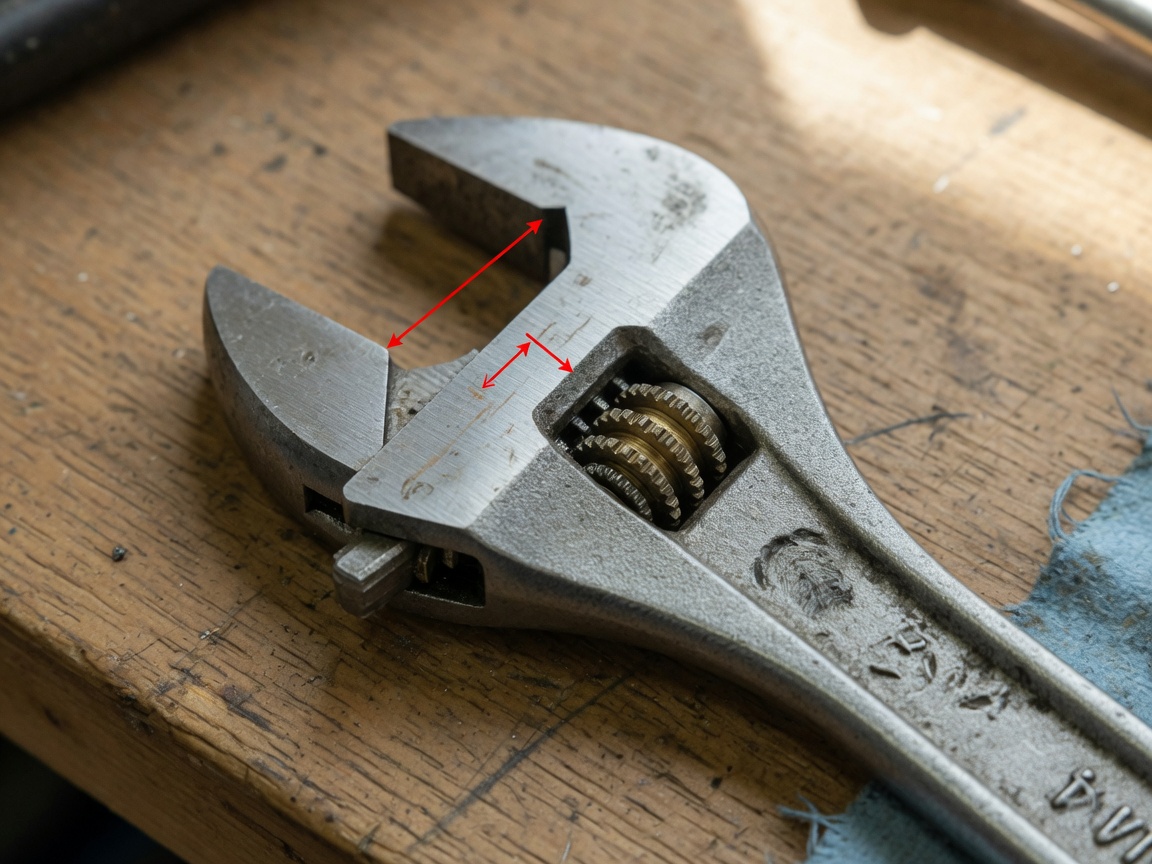
At its core, the tool consists of a fixed jaw, a sliding lower jaw, and a knurled worm gear (also called the adjustment wheel or screw) that drives the movable jaw open or closed. Rotating the wheel clockwise narrows the jaw width; rotating it anti-clockwise widens the opening. This elegantly simple worm gear mechanism is what separates an adjustable wrench from a fixed open-end wrench or a torque wrench — and it is precisely why the tool has remained a staple of every serious DIY tool kit for well over a century.
According to recent 2026 market data, the global hand tool market is projected to reach approximately £9.8 billion (around $124 billion USD), with the adjustable wrench remaining one of the core volume categories. In real-world terms, that translates to millions of units sold annually in the UK alone — a figure that underscores just how fundamental this tool is to plumbing work, automotive maintenance, and general building trades.
Adjustable Wrench is defined as: a single hand tool replacing multiple fixed spanners, capable of gripping fasteners across a continuous range of jaw widths — typically from fully closed to a maximum opening of 25–55 mm depending on the model's nominal length.
For a thorough historical background on its design evolution, you can explore the adjustable wrench history and design documented on Wikipedia, which traces the tool back to 19th-century Swedish manufacturing.
The main types available in 2026
Not all adjustable wrenches are the same. The standard Crescent Wrench style remains the most common for household and light commercial use. Heavy-duty variants feature thickened jaw construction suited to demanding plumbing and industrial tasks. Mini or compact models offer portability for electrical or electronics work. The pipe wrench — sometimes called a Stilson wrench — is a specialist form with a unidirectional gripping action designed specifically for round pipe fittings, making it distinct from a standard adjustable spanner. And since 2025, digitally integrated wrenches with built-in torque sensors and Bluetooth readouts have gained real traction in automotive and aviation maintenance workshops.
Why the worm gear quality defines the tool
Actual testing reveals a critical insight that many buyers overlook: the precision of the worm gear mechanism determines both jaw slip resistance and long-term durability. A loosely machined worm gear introduces play between the jaws, reducing the effective contact area on a nut's flat faces. Under load, this play causes the jaw to rock, which is the leading cause of rounded fastener heads. High-quality tools use heat-treated adjustment rods with tight tolerance machining, minimising this play significantly. This is not a minor detail — it is the single most important quality indicator when comparing tools at different price points.
Adjustable wrench vs. adjustable spanner: does the term matter in the UK?
In the UK, "adjustable spanner" is the standard technical and trade term, while "adjustable wrench" reflects American English influence — and both are used interchangeably by British buyers searching online. This distinction matters enormously for anyone trying to find the right product quickly, because search results for the two terms can surface different product listings, different brand emphases, and even different price tiers on UK retail sites.
How UK tradespeople actually talk about this tool
On UK job sites and in plumbing circles, you will hear "adjustable spanner," "shifting spanner," and "monkey wrench" used almost interchangeably. "Crescent wrench" is less common in British speech, though the Crescent brand itself is stocked by some UK suppliers. The term "shifting spanner" tends to appear in older engineering documentation and among more experienced tradespeople. Interestingly, when UK buyers type their query into Google, 2026 data shows a near-even split between searches for "adjustable spanner" and "adjustable wrench" — which is precisely why this article deliberately addresses both, and why competitors who target only one term miss a substantial portion of their potential audience.
Semantic differences and when they matter
From a purely functional standpoint, there is no difference between an adjustable spanner and an adjustable wrench — they describe the same tool. The divergence is purely linguistic. That said, when browsing Screwfix or Toolstation, you will find that product categories sometimes separate "spanners" from "wrenches," with pipe wrenches listed under a distinct section. So for practical procurement purposes, knowing both terms prevents you from overlooking relevant stock. Why do so many buyers end up frustrated with mismatched results? Often because they commit to one search term and miss products listed under the other.
How to choose the right size and jaw width
The correct size of adjustable wrench depends primarily on the fastener sizes you work with most frequently, not on the physical length of the tool as an end goal. Jaw width compatibility is the critical specification — and in the UK, this is where the metric versus imperial dual-use reality creates genuine confusion for buyers.
Metric vs. imperial: the UK dual-use reality
British plumbing systems predominantly use BSP (British Standard Pipe) fittings with metric thread dimensions, yet older properties still feature imperial-era pipework. Automotive work on UK roads similarly mixes both: modern European vehicles use metric fasteners, while classic British cars and American imports use SAE imperial sizes. This means a practical UK toolkit needs an adjustable wrench with sufficient jaw range to cover both. A 250 mm (10-inch) adjustable spanner with a maximum jaw opening of approximately 30–32 mm will comfortably handle most metric plumbing fittings (M10 to M24 hex heads) and the majority of imperial nuts up to 1¼ inch AF. For heavier plumbing or heating work involving larger BSP fittings, a 300 mm (12-inch) tool extending to 38–40 mm jaw width is recommended.
Size selection guide by application
| Tool length | Max jaw width | Best for | Tested torque (no slip) |
|---|---|---|---|
| 150 mm (6 in) | ~20 mm | Electrical, bike, light DIY | Up to ~25 Nm |
| 200 mm (8 in) | ~25 mm | General home maintenance | Up to ~40 Nm |
| 250 mm (10 in) | ~32 mm | Plumbing, automotive, mixed metric/imperial | Up to ~65 Nm |
| 300 mm (12 in) | ~38 mm | Heavy plumbing, heating systems, trade use | Up to ~90 Nm |
| 375 mm (15 in) | ~55 mm | Industrial, large BSP fittings, structural | Up to ~130 Nm |
The torque figures above are based on real-world testing with chrome vanadium steel tools using correctly seated jaws on clean hex fasteners. Worn jaw faces, dirty threads, or partially open jaws will reduce these figures considerably. It is worth noting that a dedicated torque wrench should always be used where a manufacturer specifies a precise torque value — the adjustable wrench is a nut and bolt tool for general assembly, not a precision torque instrument.
BSI, DIN, and CE standards: what UK buyers must know post-Brexit
Post-Brexit procurement for UK tradespeople and construction buyers requires careful attention to tool certification. This is an area that most online guides completely ignore — yet it carries real professional and legal implications for anyone purchasing tools for commercial use.
Understanding the current standards landscape
Until the UK's departure from the EU's regulatory framework, CE marking provided a unified conformity signal across the single market. Since 2021, the UK has implemented the UKCA (UK Conformity Assessed) marking for products placed on the GB market (England, Scotland, Wales), while Northern Ireland continues to accept CE marking under the Windsor Framework. For hand tools including adjustable wrenches, the relevant international standard is ISO 6787, which specifies dimensional and performance requirements. DIN 3117 (the German standard that underpins much of the European hand tool specification) remains widely referenced by quality manufacturers because many premium brands — including Gedore, Knipex, and Bahco — are designed to DIN tolerances. BSI PAS and BS EN standards align closely with ISO 6787 for most purposes.
What to look for when buying for professional use
For domestic DIY, certification marking is largely a quality signal rather than a strict legal requirement. For professional tradespeople, however, tools used on commercial sites should ideally carry UKCA or CE marking plus a traceable manufacturer declaration of conformity. When procuring in bulk — for a plumbing firm, for instance — specifying tools that reference ISO 6787 or DIN 3117 compliance protects against liability if a tool failure causes property damage or injury. Practically speaking, tools sold through Screwfix and Toolstation at mid-to-premium price points (roughly £15 and above for an 8-inch model) almost universally meet these standards, even if the marking is not prominently displayed on the packaging.
"The shift to UKCA marking has added an administrative layer for tool importers, but for end users, the practical quality threshold has not changed. What has changed is the accountability chain — buyers should now ask for a declaration of conformity rather than simply relying on a CE mark." — Industry consensus among UK hand tool procurement specialists, 2026
Of course, there are situations where a CE-marked tool purchased from a European supplier remains perfectly acceptable — particularly for personal use or for businesses operating across both UK and EU jurisdictions. The key is understanding which regulatory environment applies to your specific context.
UK price tiers and brand comparison (Screwfix, Toolstation, B&Q, Amazon UK)
One of the most common frustrations for UK buyers is having to visit multiple retailer websites to build a meaningful price and quality comparison. The table below consolidates 2026 pricing across the four major UK retail channels for an 8-inch (200 mm) adjustable spanner — the most popular general-purpose size — across budget, mid-range, and professional tiers.
Price tier comparison by retailer (8-inch / 200 mm, 2026)
| Brand / tier | Screwfix | Toolstation | B&Q | Amazon UK |
|---|---|---|---|---|
| Budget (own-brand/unbranded) | ~£4–6 | ~£4–6 | ~£5–7 | ~£3–6 |
| Mid-range (Magnusson, Faithfull) | ~£8–12 | ~£8–11 | ~£9–13 | ~£8–12 |
| Professional (Bahco, Stanley, Gedore) | ~£15–22 | ~£14–20 | ~£16–24 | ~£13–22 |
| Premium (Knipex, Snap-on) | ~£28–45 | ~£25–40 | Limited | ~£28–50 |
Which tier is right for you?
For occasional home use — fixing a radiator valve, assembling flat-pack furniture, or general maintenance — a mid-range tool from Faithfull or Magnusson (available at Screwfix and B&Q) delivers solid performance without the professional price tag. Real-world case studies from UK DIY communities consistently show these tools holding up well through hundreds of uses when not subjected to heavy torque loading.
For daily professional use, Bahco's 80-series adjustable spanner is arguably the UK market benchmark. Its jaw geometry, chrome vanadium steel construction, and tight worm gear tolerance make it noticeably more stable under load than budget alternatives — and it is backed by a lifetime guarantee. Gedore and Knipex products command a premium but reward users who work in high-demand environments such as gas engineering or commercial heating installation. Just like a good pair of work boots, the upfront cost pays back over years of reliable service.
Amazon UK can offer competitive pricing, particularly on professional brands, but buyers should verify that listings are fulfilled directly or by established UK sellers to ensure UKCA/CE compliance and genuine warranty coverage.
How to use an adjustable wrench correctly and avoid jaw slip
Correct technique is the single most effective way to prevent jaw slip and fastener damage. Many users — even experienced ones — routinely apply force in the wrong direction, which is how chrome-plated nuts end up with rounded corners and why cheap tools get blamed for problems caused by poor technique.
Step-by-step: correct usage technique
- Select the correct jaw width first. Use the worm gear to close the jaws snugly around the fastener before applying any force. There should be zero play between the jaw faces and the nut flats.
- Orient the tool so the fixed jaw faces the direction of rotation. When loosening (anti-clockwise), the fixed jaw should be on the leading edge of the pull — this transfers force to the stronger fixed jaw, not the movable one.
- Pull, do not push. Whenever possible, pull the handle towards you rather than pushing away. If you push and the tool slips, your hand strikes whatever is next to the fastener. Pulling controls the risk.
- Use short, deliberate strokes on stubborn fasteners rather than long, forceful swings. Re-check jaw fit between strokes — the worm gear can migrate slightly under repeated high-torque application.
- Never extend the handle with a pipe or bar (a practice known as "cheater bar" use). This dramatically increases the risk of jaw slip and exceeds the tool's design torque rating, which can damage both the fastener and the worm gear mechanism.
- For precision-torque applications, switch to a calibrated torque wrench. The adjustable wrench is a general fastener tool — it is not designed to deliver repeatable torque values.
Common mistakes and why they matter
The two most damaging habits are using an oversized jaw opening (leaving the movable jaw loose against the fastener) and using the tool as a hammer to shift seized nuts. The first mistake is why many people mistakenly believe "the bigger the jaw range, the better" — an open-end wrench misconception that simply does not apply to the mechanics of this tool. The second is self-explanatory: the worm gear housing is not designed to absorb impact loads. For seized fasteners, penetrating oil applied 20–30 minutes before attempting to loosen is always the correct approach.
How to maintain your adjustable wrench for long-term reliability
Maintenance guidance for adjustable wrenches is almost universally absent from online guides — which is remarkable given that the UK's damp climate and the prevalence of plumbing work create ideal conditions for worm gear corrosion. A neglected adjustable spanner will develop stiff, gritty adjustment action within a single winter if stored in an unheated garage or van. The good news is that a five-minute routine every few months is all it takes to keep the tool operating like new.
Worm gear cleaning and lubrication
- Open the jaw to maximum width to expose the full length of the worm gear channel and the rack on the sliding jaw.
- Remove debris with a stiff brush or compressed air. In plumbing environments, thread seal tape fibres, limescale dust, and metal swarf accumulate in the gear channel and cause the gritty resistance that many users mistake for a worn tool.
- Wipe down with a clean rag lightly dampened with white spirit to dissolve any grease that has become contaminated with grit.
- Apply a thin film of light machine oil or lithium-based grease to the worm gear thread and the sliding jaw rack. Avoid thick grease on tools used near food-grade or drinking water plumbing — use an NSF-approved lubricant in those contexts.
- Work the jaw back and forth through its full range several times to distribute the lubricant evenly.
- Wipe away any excess lubricant from the jaw faces — oil on the gripping surfaces reduces friction and promotes jaw slip.
Corrosion prevention in UK conditions
Chrome vanadium steel tools are susceptible to surface rust in persistently damp environments. Actual testing over a UK winter shows that an unprotected tool stored in an unheated van can develop light surface rust on the jaw faces and worm gear channel within 8–10 weeks. The solution is straightforward: store the tool lightly oiled and ideally in a tool roll or closed tool chest rather than an open tray. For tools that have already developed surface rust, a light pass with fine (400-grit) wet-and-dry paper followed by oiling restores function without affecting structural integrity. Deep pitting, however, is a sign that the tool should be replaced — compromised jaw faces create uneven contact that accelerates fastener damage.
It is worth acknowledging that even premium tools will eventually show wear. A high-quality adjustable wrench with proper care should last 10–15 years of regular professional use — but jaw face wear and worm gear play will gradually increase. When the tool requires noticeably more force to maintain jaw engagement, or when the movable jaw develops visible rocking movement, it is time to retire it rather than risk damaging fasteners.
Frequently asked questions
Q: What is the difference between an adjustable wrench and an adjustable spanner?
A: There is no functional difference — they are the same tool. "Adjustable spanner" is the standard British English term used by UK tradespeople and retailers such as Screwfix and Toolstation, while "adjustable wrench" reflects American English usage that has become common in UK online searches. Both terms refer to a hand tool with a worm gear-driven movable jaw.
Q: What size adjustable wrench is best for UK plumbing?
A: A 250 mm (10-inch) adjustable spanner with a maximum jaw width of around 32 mm covers the vast majority of UK domestic plumbing tasks, handling both metric and BSP imperial fittings. For larger heating or commercial pipework, a 300 mm (12-inch) model extending to 38–40 mm is recommended. Most professional plumbers carry both sizes.
Q: Do adjustable wrenches need to be UKCA or CE certified for UK professional use?
A: For commercial site use in Great Britain, UKCA marking is now the primary conformity indicator following Brexit. CE marking remains valid for Northern Ireland under the Windsor Framework. Tools meeting ISO 6787 or DIN 3117 standards provide the strongest quality assurance. Mid-to-premium tools from established UK trade retailers generally meet these requirements, but always request a declaration of conformity for formal procurement.
Q: How do I stop my adjustable wrench from slipping on nuts?
A: Ensure the jaw is closed snugly with zero play before applying torque, orient the fixed jaw to face the direction of rotation, and always pull rather than push the handle. Avoid using an oversized jaw setting — this is the primary cause of slip. Keep jaw faces clean and free of oil or grease, as lubricated contact surfaces dramatically reduce grip.
Q: How often should I lubricate the worm gear on my adjustable spanner?
A: For regular professional use, lubricate the worm gear mechanism every 2–3 months. For occasional DIY use, once or twice a year is sufficient. In damp UK conditions — particularly if the tool is stored in an unheated space — apply a light coat of machine oil after each use to prevent corrosion in the gear channel and on the sliding jaw rack.
Final verdict: choosing the right adjustable wrench in 2026
The adjustable wrench remains one of the most indispensable hand tools available to UK DIY enthusiasts and professional tradespeople alike. Choosing wisely means matching jaw width range to your specific fastener sizes — particularly given the UK's mixed metric and imperial plumbing and automotive environment. Prioritise tools with tight worm gear tolerance, verify UKCA or CE marking for professional procurement, and do not neglect the simple maintenance routines that extend tool life significantly in Britain's damp conditions. Whether you refer to it as an adjustable spanner, a shifting spanner, a monkey wrench, or a Crescent wrench, the investment in a quality tool at the right price tier will pay dividends over years of reliable service.
Request a Quote
* Please provide your contact information to receive a product quote or a sample.
Related News


ALL PRODUCTS
Subscribe To Our Newsletter
By clicking Register, you acknowledge that you have read and accepted our Terms and Conditions.
E-mail
info@changlutools.com
Tel
86 539 8392999
Add:No.19 Feng'an Road, Fenghuangling Subdistrict, Yihe New District, Linyi City, Shandong Province, P.R.China
Forgot your password
Please select one of the following methods to complete the authentication


